

Redefining sustainable AI computing through smarter technology choices
At Supersight, environmental responsibility is not a side initiative or a marketing add-on. It is a foundational design principle that guides how we build technology, how we deploy it at scale, and how we create long-term value for our customers and society.
Our mission is to redefine how visual intelligence is built and deployed - by proving that high-performance AI does not require energy-intensive infrastructure or constant hardware replacement.

A fundamentally different approach to computing
Most data-driven systems today rely on:
- New, resource-intensive hardware
- Centralised cloud processing
- Continuous data transfer and storage
This model has a growing environmental footprint - from material extraction and manufacturing to energy consumption and data center emissions.
Supersight takes a different path.
We build edge-native AI systems that operate directly where data is created, using repurposed smartphones as smart sensors. By doing so, we dramatically reduce environmental impact across the entire lifecycle of our technology.

Extending the life of existing devices
Millions of smartphones are replaced every year despite having powerful processors and AI acceleration capabilities still fully intact.
Instead of manufacturing new sensing hardware, Supersight:
- Repurposes existing smartphones
- Extends device lifecycles by years
- Reduces electronic waste
- Avoids emissions related to new hardware production
This approach allows us to deliver advanced visual analytics using hardware that already exists, turning potential e-waste into long-lasting infrastructure.

Edge AI: less data, less energy, better privacy
Our AI models run directly on the device, not in the cloud.
This enables:
- Minimal data transfer
- Significantly lower energy consumption
- No need for continuous video streaming
- Reduced reliance on large-scale data centers
Only anonymised, aggregated insights are produced — not raw video. This makes our solution both environmentally efficient and privacy-first by design.

Measurable impact through better decisions
Environmental responsibility is not only about how technology is built — it is also about what it enables.
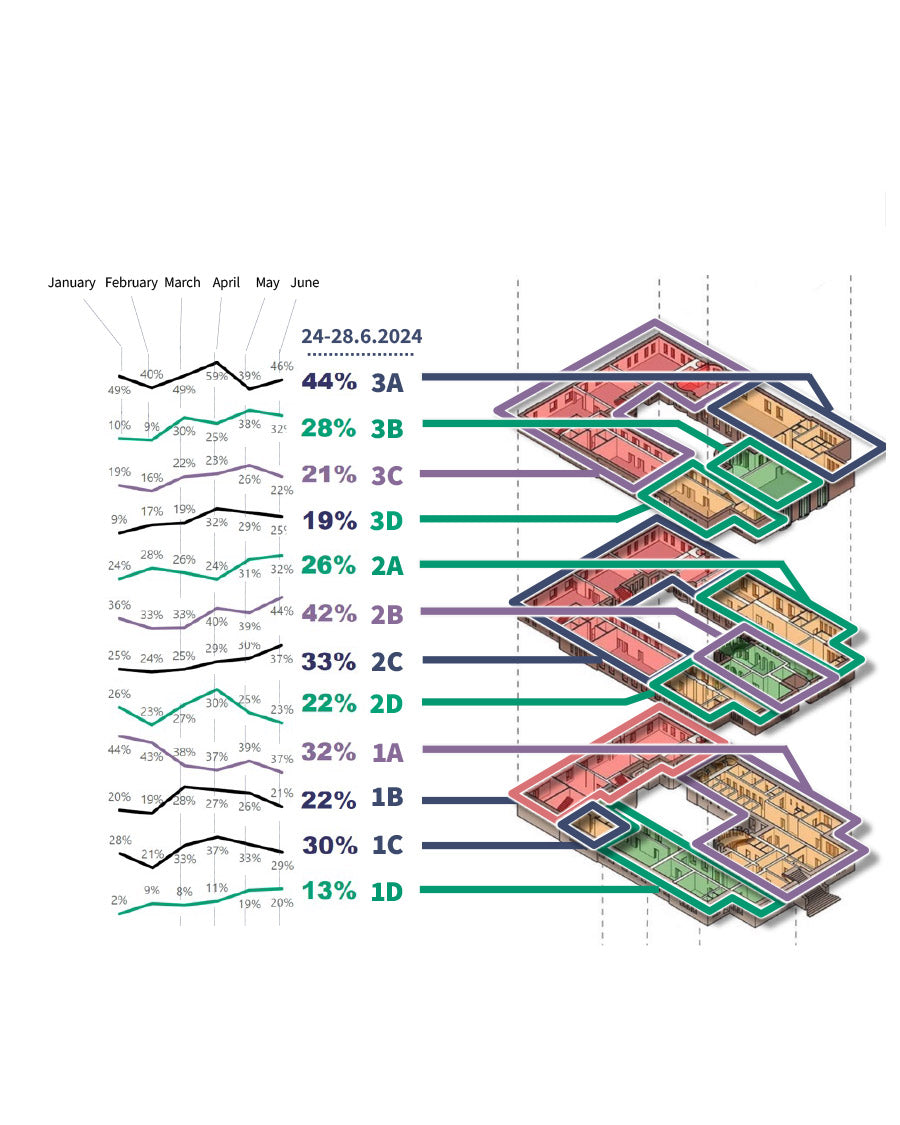
Supersight’s analytics help organisations:
- Optimise space usage instead of expanding physical infrastructure
- Reduce unnecessary energy use in underutilised spaces
- Improve operational efficiency based on real usage, not assumptions
- Plan investments using accurate data rather than oversizing facilities
In sectors such as offices, public buildings, transport hubs, and sports facilities, this leads to lower emissions, better resource allocation, and more sustainable operations.

Designed for long-term scalability
True sustainability requires systems that scale without linear growth in energy use, hardware consumption, or human effort.
Supersight is built for:
- Long device lifecycles
- Remote updates and model optimization
- Minimal maintenance
- Scalable deployments without proportional increases in footprint
This makes our technology suitable not only for today’s needs, but for responsible growth over the next decade.

Aligned with sustainable financing and regulation
Our approach aligns with:
- EU sustainability and circular economy principles
- Energy efficiency goals
- Public-sector procurement criteria
- ESG-focused investment frameworks
For our customers, this means that choosing Supersight is not only a technical decision - it is also a strategic sustainability choice.
Responsibility as a competitive advantage
We believe environmental responsibility and technological excellence are not in conflict. On the contrary: the most scalable, cost-effective, and intelligent systems of the future will also be the most sustainable ones.
At Supersight, we are proving that sustainable AI computing is not a compromise - it is a competitive advantage.